Built to improvelumbar punctureprocedural outcomes
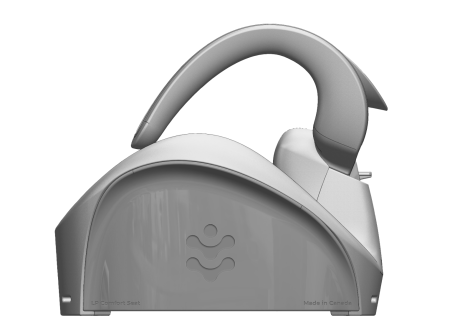
LP Comfort Seat™ is a patent-pending positioning system for newborns and young infants undergoing lumbar puncture, designed to support consistent setup, reduce handling burden, and maintain clear airway access throughout the procedure.
In high pressure moments,
consistency is compassion
In high-pressure procedural moments, repeatable positioning supports clinical confidence, reduces variability across teams, and helps create a visibly structured and controlled care environment.

For Clinicians
Confidence through repeatable positioning that reduces variability across shifts, skill levels, and mixed teams.
For Families
Visible reassurance through calm, structured setup that signals care, precision, and deliberate clinical preparation.
For Teams
A more repeatable protocol across shifts, reducing the cognitive load of improvised positioning in time-sensitive moments.
What it does well
LP Comfort Seat™ provides a patent-pending positioning approach designed to support repeatable infant lumbar puncture setup across clinical environments.
Repeatable positioning
Consistent midline alignment and forward flexion geometry across procedures and team members.

Reduced handling burden
Minimizes continuous manual stabilisation requirements during procedure setup and execution.
Stable anatomical support
Integrated support surfaces maintain positioning while allowing airway access, rapid removal & monitoring.
Faster, smoother setup
Simplified positioning workflow reduces setup time and variability in high-pressure moments.
Mixed-team usability
Designed for intuitive use across different experience levels, shifts, and clinical specialties.
Real-unit practicality
Built for clinical environments with attention to cleaning, storage, and workflow integration.
How it works
A simplified four-step positioning workflow designed for repeatable setup
Secure to procedure surface
Position the device on an appropriate flat, stable procedure surface. Thread securement straps through integrated anchors and secure firmly.
Position infant with support
Use two-person technique to carefully position the infant. One team member supports the infant while the other guides placement.
Adjust shoulder brace
Adjust shoulder brace height to achieve appropriate forward flexion. Lock the lever firmly to secure the position.
Inspect and proceed
Inspect fit, ensure no skin pinching, verify airway access. Add optional towel support if needed, then proceed with clinical protocol.
Secure to procedure surface
Position the device on an appropriate flat, stable procedure surface. Thread securement straps through integrated anchors and secure firmly.
Position infant with support
Use two-person technique to carefully position the infant. One team member supports the infant while the other guides placement.
Adjust shoulder brace
Adjust shoulder brace height to achieve appropriate forward flexion. Lock the lever firmly to secure the position.
Inspect and proceed
Inspect fit, ensure no skin pinching, verify airway access. Add optional towel support if needed, then proceed with clinical protocol.
Inspect the LP Comfort Seat
Explore the patent-pending LP Comfort Seat™ from multiple angles
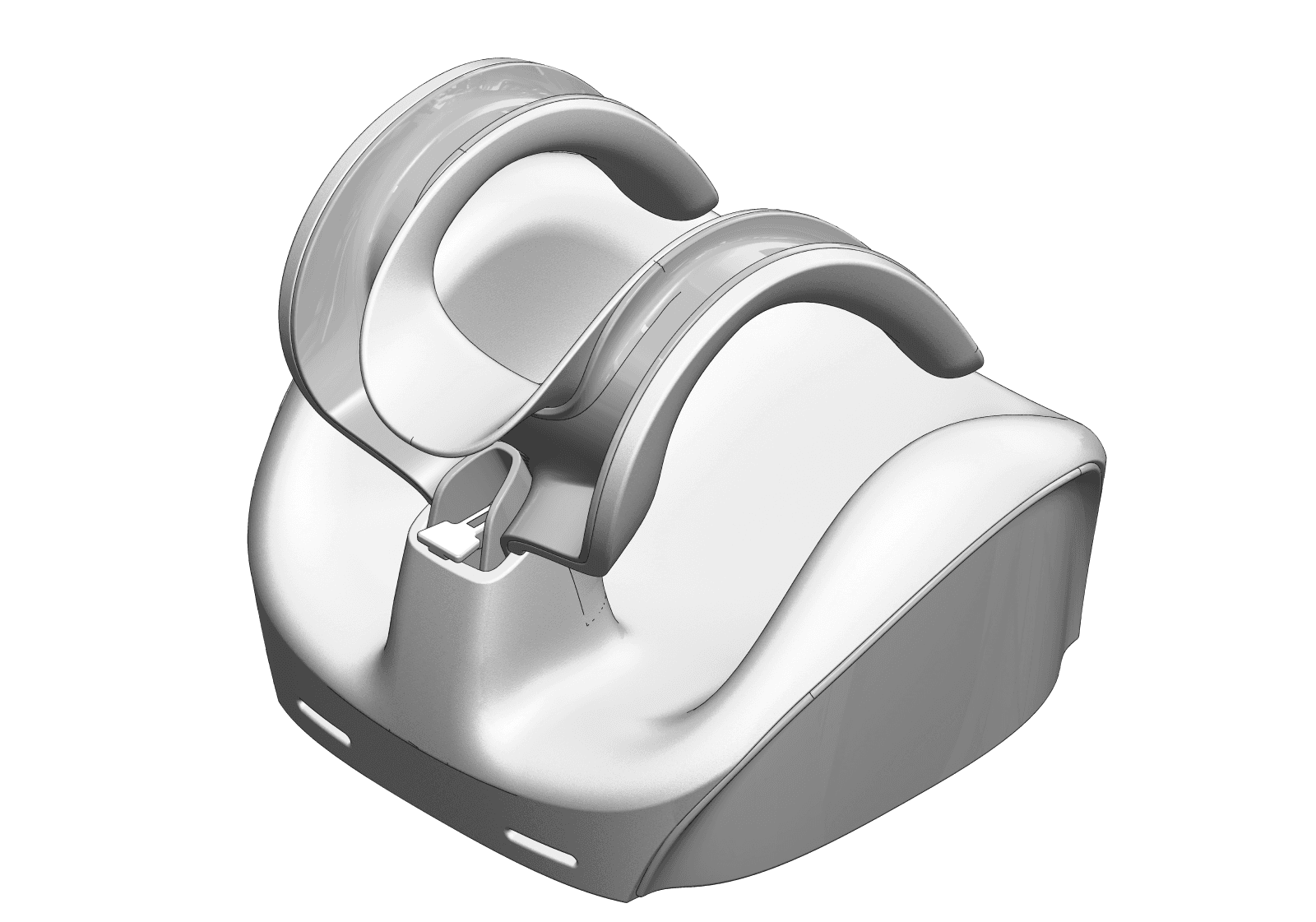
Shoulder Brace Arms
Flexible upper supports that help guide the infant's head and neck into position during placement and help maintain controlled forward flexion once fitted.
Materials & Manufacturing
A three-material construction system engineered through additive manufacturing for structural support, patient-contact comfort, and locking reliability
Structural Exoskeleton Frame
PA12 forms the primary exoskeleton and load-bearing geometry of the LP Comfort Seat. It provides the structural frame onto which the separate TPU contact overlay is attached..
Next-to-Skin Comfort Overlay
TPU forms the attached comfort and contact layer of the device, providing smooth next-to-skin surfaces that support controlled positioning and reduce abrasive contact during use.
Locking Pin Material
Onyx is used specifically for the locking pin within the height-adjustment mechanism. It is a micro carbon fibre filled nylon selected for stiffness, durability, and mechanical reliability within the locking system.
Process Mapping
SLS for structural nylon geometry
FDM for the attached contact overlay
FFF for the locking pin component
Mechanical Role by Material
Load-bearing exoskeleton
Next-to-skin interface
Mechanical reliability
Component Accuracy
Locking system material breakdown:
Where it fits
Designed for high-acuity paediatric environments where repeatable positioning with LP Comfort Seat™ supports consistent procedural setup.
Paediatric Emergency Department
High-pressure, time-sensitive environment where consistent setup protocols support both clinical outcomes and family confidence.
NICU
Specialized neonatal environment requiring gentle, precise positioning for the most vulnerable patient population.
PICU
Intensive care setting where controlled positioning supports complex clinical protocols and monitoring requirements.
Inpatient Paediatrics
General paediatric ward environment where standard protocols benefit from consistent, repeatable positioning equipment.


